My wife told me to type this:
“I’m so lucky, my wife knows almost everything”.
Not a motor-powered one, a human-powered one. A very nice early 1980′s Bianchi Limited. Even though it is almost 30 years old, it is in nearly mint condition. I’ve wanted a nice steel framed bicycle and because smaller frames fit me best but are harder to come by, when this one showed up I didn’t hesitate.
This winter it will see a complete going-over and will be ready for next spring. To tell the truth, it may just see a few miles yet this year – weather depending.
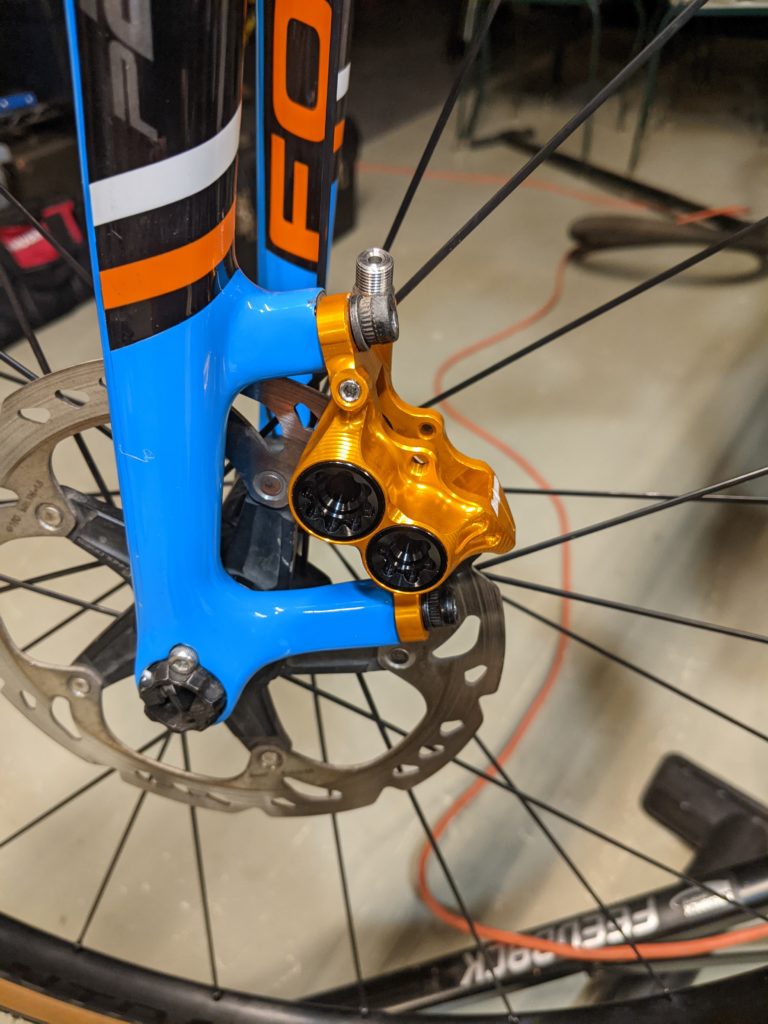
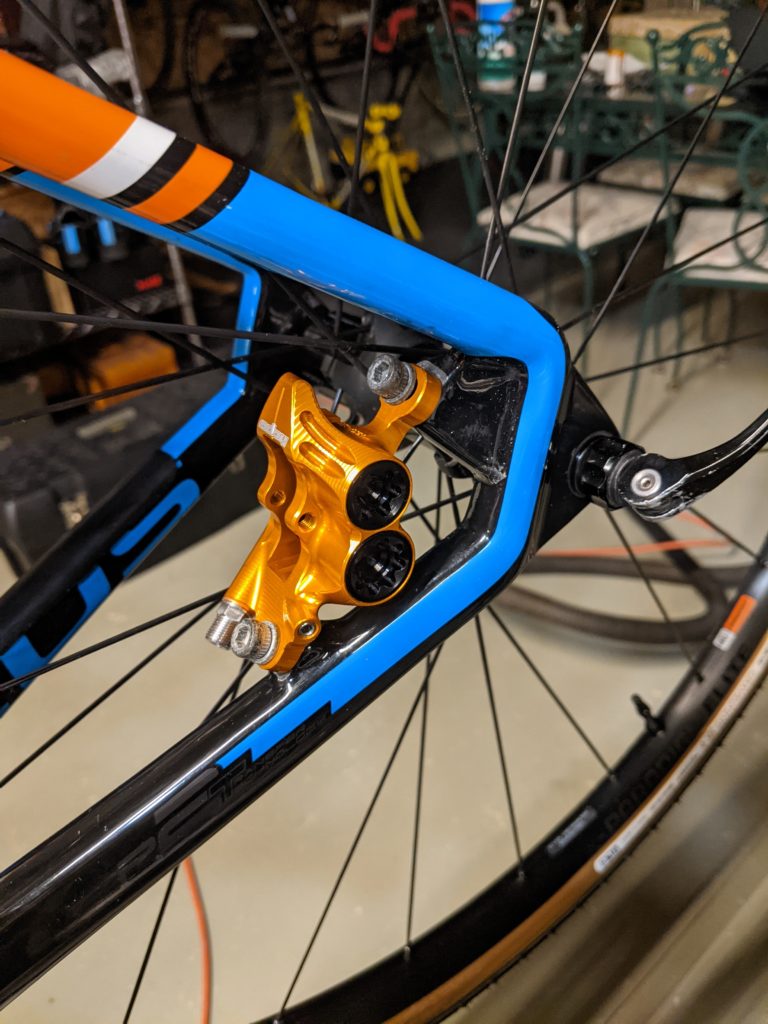
Take a look at these photos – very nice for a 30 year old bicycle.
This time, without gasoline. That’s right, bicycling.
Last year, my wife and I bought new bicycles. Good, not great, Trek bikes from a very good shop in Oswego, Illinois. When I was in high school in upstate New York, it seemed like I spent entire summers on the bike with a friend named Steve George. Up and down the hills of upstate New York; long ago I lost count of the miles and hours we spent riding. The bicycling bug never actually left, just was dormant for a while.
We started going on rides around the house, and also on the Fox Valley and Gilman bike trails. It’s been a lot of fun and good exercise too. I have a old Fuji Dynamic 12 I bought many years ago that is in need of restoration, maybe that will become a winter project. Precisely which winter remains a mystery.
Anyway, I decided this year to ride more and it’s been great. We’re fortunate to live in the country so we can go on several nice rides right out of our driveway.
More to come…
Ah, the electrical work. What I need to do is fairly simple, just replace the switches for the abs disable and the 4-way flashers so that the new ones will mount in the Highway Dirt Bikes top clamp.
Actually, those were the easy ones, but a problem with the turn signals caused quite a delay.
I couldn’t get the turn signals to work properly. The right signal was fine, the left one wouldn’t flash at all and the indicator flashed quickly. I swapped bulbs from right to left as they looked fine, but the left side was still inop. I noticed that the dash illumination bulbs were flashing when the left signal should have been flashing, so I began to suspect a diode. Of course the diodes on the F650 are hidden inside the crankcase – not really but they are still tricky to get a hand on. Replacement diodes from BMW are $17 each, and that was just ridiculous. I had some 3W diodes that should work fine, so I soldered 1/4″ spade fittings and then shrink-wrapped them. I replaced the original diodes and unfortunately the left signal was still inop. OK, this is becoming annoying. I took the left rear signal apart, and it was fine. The left front however was not. One of the wires was not attached to anything. We are talking 12v here so it wasn’t likely to spark across space. I crimped the connector together with pliers to make a better mechanical and electrical connection and like magic the turn signals (and the flashers) are working. At least I have better diodes that aren’t working at their maximum capacity in place now.
I removed the oem heated grip switch because it simply wasn’t possible to use it with the aftermarket heaters. All I needed was a DPST center off switch, but I spent a good hour with the ohmmeter trying to work out a set of contacts that would give that result. Not to be found. So, I ordered a switch blank to cover the oem switch and a new mini rocker switch. Both arrived fairly promptly and the wiring was simple enough.
The grip heater elements are held onto the throttle tube and the shrink wrap with 3M adhesive and then the grips are glued on with JB Weld. Not bad, all assembled and working properly with my brand new switch.
You might think we’re ready to go now, but you’d be wrong. With the addition of the risers, the front brake line from the handlebars to the ABS block on the headstock is now too short to allow full-lock turns. I took the oem line off and went to the local custom bike shop to order a replacement 2″ longer. When it came back the fittings weren’t exactly the same angles, so the line had to be routed slightly different to the original. That difference was enough that the 2″ should have been 3″, but it wasn’t. Crap. I ordered a new line (the fittings are OK) and now I get to wait another 2 days before I can put the brake line back in and bleed the front brakes.
Such are the joys of customizing bikes. Stay tuned for the exciting conclusion…
Now that the suspension is sorted out, the final hurdle is the handlebars and the hand guards. I ordered a set of Ultimate hand guards from Highway Dirt Bikes, including mirrors and switches. I had also ordered a set of Protaper SE alloy handlebars in the CR high bend. After some disassembly and some trial fitting, it was obvious that some risers were necessary to give the handguards the clearance needed for full-lock turns. I got a set of Rox risers that seemed to fit the bill and swapped the top clamp for the BMW for one that would fit the Rox riser bolt pattern. Now the clearance was OK. I turned some 1″ extensions to make the bars longer so that the switch housings could be placed in their (roughly) original positions. Mechanically, everything fits.
Stay tuned for the electrical work. My favorite.
I found a pair of stainless Supertrapp mufflers on ebay, and knowing that I wanted a tool tube on the right side and a single muffler on the left, I bought them. It fits properly, but I need a pipe bent and swaged to connect the exhaust pipe to the muffler inlet. Off to Tuffy’s in Yorkville. About 20 minutes after I got there I had a connecting pipe in place that only needed clamps and it was done.
The front wheel bearings and seals were the work of a few minutes and they were done. Freezing the bearings and heating the hubs made it fairly simple. A big socket that just fit the outer race was a help too.
READY TO RIDE!
The first ride was a disappointment. The forks were stiff and the rear shock was very nice. I guess the extra preload I added with the slightly longer spacer was coming back to bite me. Oops. Can’t leave it this way – one of the advantages of pvc spacers is that they’re easy to cut. Mark volunteered his garage this time, so I headed up there and we cut 5/8″ off the spacers and buttoned everything back up. Much better. After a few more miles I may still shorten the spacers a bit more, but I need to see how the forks work when the fluid is warmed up and on varying terrain.
There is a very large field north of my house that’s just begging to be ridden. The full knobby tires are very nice when you run into mud, the bike just keeps going, albeit more slowly than before. With the scorpions on the KTM, it would have been dirtnapping long before I ran out of mud.
Clearly, I had the wrong tires for the eastern TAT. Oh, well. Ride, pick up your bike in the mud, and learn.
I try.
OK, we’re finally back to a rolling chassis, or something pretty close to that. But the front wheel needs new bearings, seals, and axle spacers and the forks need Racetech valves, new springs, and new fluid. Luckily, my good friend Mark is up for the messy job of rebuilding the forks. Actually, it was Mark that made a mess by squirting fork oil on the ceiling of the garage. He’ll deny it but it’s still true.
Removing the front wheel and caliper is a few minutes work, and the forks are off a few minutes after that. Disassembly is almost always easier and quicker than reassembly – in my experience anyway. So we remove the circlips and the fork cap (not threaded on these forks) and pour out what fluid we can. The spacer and spring come out, along with a washer or two. The other fork was left assembled so that we would have a guide if our memory turned out to be faulty, or if our memory was so feeble that we couldn’t remember if it was faulty. Anyway, the piece of tubing supplied with the Racetech springs was not long enough to make spacers for both forks, so off to the hardware store we went. A piece of 1″ PVC tubing fits inside the forks, so that’s what I decided to use. I had to use my impact wrench to remove the bottom screw on the fork and finish the disassembly. While the forks are apart I replaced the bushings and guides.
We drilled the required holes in the tubing, cleaned the fork parts thoroughly, and began reassembly. About 10 minutes later, we had the fork reassembled and were ready to cut the spacer. From the top of the tube (while extended) to the bottom of the installed fork cap was about an inch of preload. We poured in 610ml of 10-wt Honda fork fluid. I left the spacer extending about 3/8″ out of the tube for 1 3/8″ of preload. The extra preload made it a booger to get the fork caps reinstalled but we got it done. The second fork was fairly simple having just seen the necessary steps. There was barely enough fork fluid for both, but we got the full 610ml in the second fork as well.
I replaced the stem bearings while the forks were out, as they seem to have a nasty habit of failing at around 20k miles and my F650 has, well, about 20k miles. Better to work on it here in the garage with a full set of tools than on the side of the road in BFE. Using the freezer and a heat gun, the job was actually pretty simple and the special socket for the special nut was helpful. I’ll put a few miles on it and then recheck the nut for the proper torque.
Next, the ride.
The rear shock is back from Jay at Sasquatch, so now I can begin the reassembly process. Previously, I had cleaned and relubed all the bearings in the swingarm and the suspension link, so now it’s just a matter of reassembling everything and making sure that all of the bolts and parts are in their respective places. It went pretty quickly, but BMW needs to take a lesson from KTM. I lost count of the number of wrenches and sockets needed to put this back together. KTM has obviously spent some time on the fasteners and the number of different sizes is minimal compared with the BMW. This means that a larger (and heavier) tool kit is necessary to perform the same maintenance as the KTM. It may not be terribly important when on an asphalt trip, but in the sticks it may be a matter of walking vs riding.
I got the wheel bearings (all six of them, front and rear) from a bearing store and saved a lot of money (the BMW tax). I needed seals too, so I ordered them through my local NAPA store. Took two days and cost less than half of the BMW price.
The rear wheel and sprocket carrier bearings are replaced, along with the seals, so the rear wheel is ready to be reinstalled. There is a spacer on the sprocket carrier side that has some grooves worn in it so I will order a replacement and see if any spacers on the front wheel need replacement. No sense using an old, worn spacer with new seals.
Next is the front wheel bearings and seals, then I’m installing Racetech gold valves and new springs in the forks. They’ll get fresh fluid and will be ready to go. While I’m in there I’ll replace the stem bearings and races and that should wrap up the mechanical service and upgrades on the bike.
Oops, forgot about the exhaust. I picked up a set of stainless Supertrapp mufflers, but I need to have a pipe bent to connect the header to the muffler.
While I’m waiting on the fork parts to arrive, I’m finishing up the going-over-the-whole-bike-front-to-back job. There are a couple of stripped screws, but those are easily fixed.
The OEM bash plate is basically a weed guard, because it certainly isn’t a rock guard. Even small rocks would defeat it, as would some tough weeds but I’ll give it the benefit of the doubt. I’ve ordered the Touratech bash plate and also the adjustable, folding shift lever and the folding brake lever. I will probably put the original levers in the spares kit.
I began taking the rear suspension apart, mainly so that I could extract the rear shock. That actually wasn’t too difficult a task, but once I got a good look around I decided the automatic oiler had to go. There is a layer of dirt and dust held together by ATF that is nasty and hard to remove. Pulling the front sprocket cover showed another problem – the front sprocket is badly hooked. I’ve ordered front and rear JT sprockets and a DID o-ring chain to fix this. I’ll hang onto the chain and the rear sprocket in case some ADVer needs it.
Cleaning the gunk off the drive side and underside of the bike is slow but is coming along. I also pulled the swingarm, checked, and relubed the swingarm bearings. I also relubed the bearings in the suspension link.
Because I don’t know how long it will take to get the shock rebuilt, I made a “replacement” shock from a piece of plywood so that the bike can be rolled around the garage in the meantime. Once the suspension is reassembled, I’m going to replace the wheel bearings front and rear. At that point I have some minor electrical work to do and figure out the luggage and the bike is TAT-ready.
Well, swapping the stock forks for a set of USD forks just isn’t going to work for me. I’ve sold the parts I bought, and they’ve been shipped to South Africa. Nils, ride safely. I decided to install Racetech emulators and springs, new fluid, and button them up.
While I’m working on the forks I will also replace the stem bearings. The BMW bearings are notorious for lasting only about 20k miles and that happens to be the mileage on my bike. Now is a good time to postpone that failure.
While I was concentrating on the forks I hadn’t actually decided what to do about the rear shock. Well, now I have. I’m going to have Jay at Sasquatch Suspension rebuild, revalve, and respring the rear shock. At roughly half the cost of Ohlins or Wilbers shocks, the reviews I read are all positive and he has patiently answered my questions. I ordered the Racetech parts for the forks through him.
So I’m taking a slightly different direction, but still moving forward.